Why Can’t We Write Backend Logic in the Frontend?
Why Can’t We Write Backend Logic in the Frontend?
This is a very common question when people start learning web development.
If JavaScript can run in the browser, and JavaScript can also run on the server, then why do we even separate frontend and backend logic? Why not just write everything in the frontend and be done with it?
To answer this properly, we first need to understand where frontend code actually runs and how that environment is fundamentally different from a backend server.
Where Does Frontend Code Really Run?
Whatever frontend logic you write — all the JavaScript, all the UI logic — is not executed on your server.
What actually happens is this:
-
You deploy your frontend code to a server.
-
The browser requests that code.
-
The server sends the JavaScript files to the browser.
-
The browser executes that code on the user’s machine.
So the browser becomes the runtime environment for your frontend code.
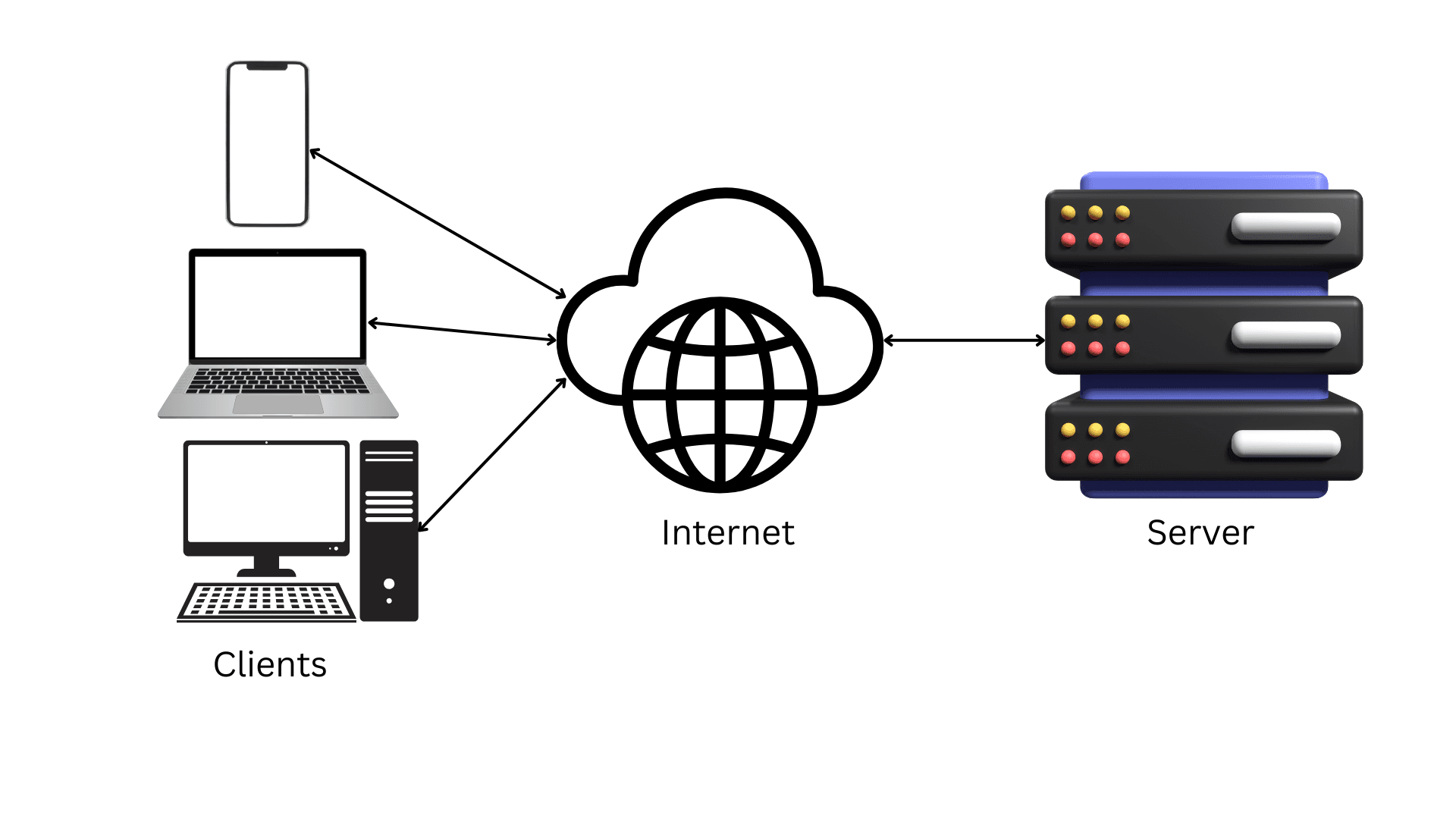
Now compare this with a traditional backend setup.
In a backend system:
-
A client sends a request
-
The server processes the request
-
The server sends back a response
The processing happens on the server — for example, on an AWS EC2 instance or any other backend machine.
This is the key difference:
-
Frontend → code runs on the client’s browser
-
Backend → code runs on a controlled server environment
Once you understand this distinction, the rest of the problems become obvious.
Some of the reasons are:
1. Browsers Are Sandboxed Environments
Browsers are not general-purpose operating systems. They are heavily sandboxed environments.
That means frontend JavaScript is isolated from:
-
The operating system
-
Running processes
-
The filesystem
-
Environment variables
Frontend code can only access:
-
The DOM
-
Browser APIs
-
Limited storage like cookies or localStorage
-
External APIs (with restrictions)
This isolation exists for a very important reason.
Think about what a browser is actually doing:
It is downloading code from a remote server and executing it on a user’s machine.
If browsers were not sandboxed, any website you visited could:
-
Read your files
-
Copy sensitive documents
-
Access private system data
-
Send everything to its own servers
That would be terrifying.
So browsers enforce strict security policies to protect users.
But those same protections make it impossible to run real backend logic inside the browser.
A backend often needs to:
-
Write logs to files
-
Read environment variables
-
Access system resources
Browsers simply do not allow this.
2. The CORS Problem
Another major limitation comes from browser security policies like CORS.
Browsers do not allow JavaScript to freely call external APIs on other domains unless those APIs explicitly allow it through specific HTTP headers.
For example:
-
Your frontend runs on frontend-demo.xyz
-
You try to call an API on payments-service.com
-
The browser blocks the request unless the API allows it
This restriction makes sense from a security perspective, but it becomes a serious limitation for backend logic.
Backend servers regularly:
-
Call multiple external services
-
Integrate with payment gateways
-
Fetch data from third-party APIs
-
Communicate with internal services
A backend cannot afford to be blocked simply because an external service didn’t set the right headers. Servers need unrestricted network access — browsers do not provide that.
3. Databases Are Not Browser-Friendly
Now let’s talk about databases.
Backend servers use native database drivers — for example:
-
PostgreSQL drivers
-
MongoDB drivers
-
MySQL drivers
These drivers are built for environments that can:
-
Handle raw socket connections
-
Work with binary protocols
-
Maintain long-lived connections
-
Manage transactions efficiently
One of the most important concepts here is connection pooling.
Backend servers don’t open a new database connection for every request. Instead, they maintain a pool of reusable connections because:
-
They receive thousands of requests per second
-
Opening and closing connections repeatedly would overwhelm the database
Browsers are not designed for this at all.
Even if browsers could connect directly to databases:
-
Every user would need their own connection
-
Thousands of users would overwhelm the database instantly
-
Credentials would be exposed to the public
-
Security would completely break down
Databases are designed to trust backend servers — not random client devices.
4. Computing Power Is Inconsistent
Frontend applications run everywhere.
They might be running on:
-
A powerful desktop
-
A low-end smartphone
-
An old laptop
-
A device with very limited RAM and CPU
You cannot assume consistent computing power on the client side.
Heavy business logic, data processing, or complex calculations can:
-
Freeze the UI
-
Drain battery
-
Cause crashes
-
Create wildly inconsistent user experiences
Backend servers solve this problem by centralizing computation.
If your backend needs more power, you can:
-
Increase CPU
-
Increase memory
-
Scale horizontally
You cannot do that with millions of user devices.
So Why Can’t Backend Logic Live in the Frontend?
At this point, the answer should be clear.
Backend logic does not belong in the frontend because:
-
Browsers are sandboxed for security
-
Network access is restricted
-
Databases require persistent, trusted connections
-
Client computing power is unpredictable
-
Data integrity and security cannot be enforced on the client
Even if it were technically possible, it would be a terrible idea.
The Bigger Picture
This separation between frontend and backend is not arbitrary.
It exists because:
-
Frontend is about user interaction and experience
-
Backend is about data, security, consistency, and scalability